Identifying Common Concerns Homeowners Have About Their Porcelain Floors
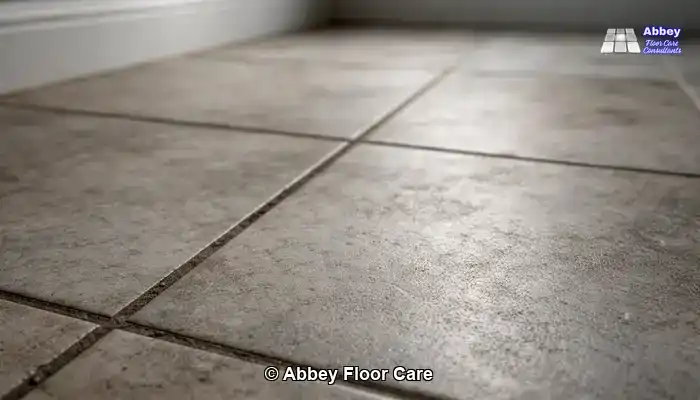
Expert Insights on Porcelain Tile Restoration in Surrey: Many homeowners in Surrey reach out to me due to their porcelain tiles appearing dull or unclean despite their cleaning efforts. This problem is particularly prevalent with textured surface tiles, as the intricate patterns often trap soil within their grooves, making it challenging to achieve a truly pristine appearance. This inherent difficulty in cleaning textured tiles complicates the maintenance process significantly, leading to frustration for homeowners.
A common worry is the appearance of a grey film that often surfaces after mopping. This issue typically arises from residues such as grout haze or leftover detergent on the tile’s surface instead of genuine stains. Understanding this key distinction is vital for effective tile maintenance and ensuring that cleaning efforts yield positive outcomes.
Over time, grout lines can develop a dark and patchy appearance, creating a stark contrast with the unaffected tiles. This phenomenon occurs because grout absorbs dirt and contaminants much more readily than porcelain, leading to the grout appearing worn and discoloured compared to the surrounding tiles.
Homeowners with polished porcelain tiles may notice subtle swirls and a decline in clarity as time passes. These imperfections do not stem from deep damage within the tile but rather from tiny scuffs on the factory finish. By employing the right maintenance techniques, you can effectively restore the clarity and appearance of polished surfaces, enhancing their aesthetic appeal.
What Factors Cause Porcelain to Behave Differently Than Surrounding Grout?

Porcelain tiles are fully vitrified, which means they possess excellent resistance to absorption. As a result, most issues manifest as chemical films on the surface, preventing contaminants from penetrating the tile’s body. This unique characteristic clearly differentiates porcelain from other flooring materials and highlights its durability.
In contrast, cement-based grout is porous, allowing contaminants to infiltrate easily, which leads to a gradual darkening over time. This explains why grout frequently appears in worse condition than the tiles themselves; it readily absorbs dirt and stains, making maintenance a more significant challenge for homeowners.
In kitchens and bathrooms across Surrey, hard water contributes to mineral buildup on surfaces, often visible as chalky marks known as limescale deposits. These deposits can be difficult to manage and may necessitate specific cleaning strategies to effectively eliminate them from your tiles.
Since porcelain rarely accumulates stains, using harsh cleaners to eliminate surface marks can inadvertently damage the grout and surrounding joints instead of addressing the core issue. This highlights the need for employing appropriate cleaning products specifically designed for the unique properties of porcelain tiles.
When Should You Seek a Professional Deep Clean and What Are the Limitations?
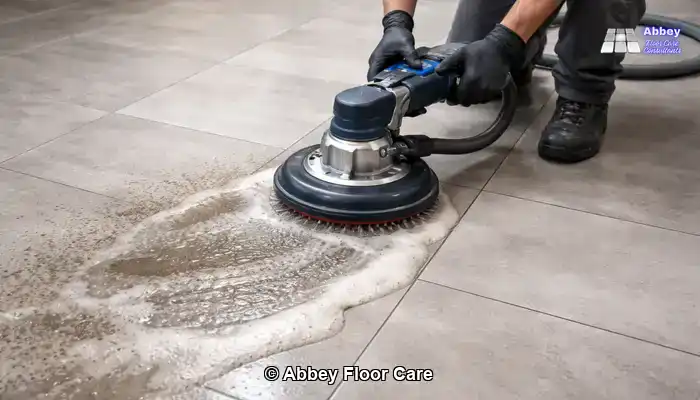
When residues, haze, or soil accumulate on your floor, investing in a controlled chemical-mechanical deep clean can prove to be incredibly beneficial. This process utilises professional-grade products alongside mechanical agitation to effectively break down chemical films while ensuring that the porcelain tiles remain protected throughout the cleaning procedure.
During this deep-cleaning approach, alkaline solutions are employed to dissolve grease and traffic soil, as alkaline cleaners specifically target organic buildups while safeguarding the tile itself. This targeted strategy guarantees that the cleaning remains efficient and highly effective, ensuring a thorough cleanse.
Following the application of alkaline solutions, acidic solutions are utilised in a separate cleaning stage to eliminate mineral films and residues left within the grout. This is executed carefully as an acid wash in areas deemed safe for such treatment, preserving the integrity of both the tiles and the grout.
After mechanical agitation, it is crucial to thoroughly remove the slurry using slurry extraction techniques. Failing to perform this step can lead to residues drying back onto the floor, resulting in the return of the haze and the initial cleaning challenges you sought to eliminate.
However, it is essential to understand that even the most thorough deep clean cannot reverse problems such as bleached grout or wear within the joints, as these issues originate deep within the grout rather than being limited to the tile surface.
In What Scenarios Does Grout Recolouring or Joint Renovation Prove More Beneficial?
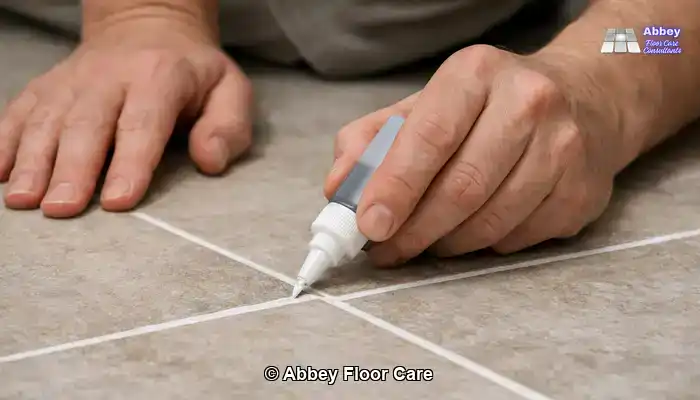
When grout has faded, become stained, or displays uneven colouring, the most effective cosmetic enhancement is often grout recolouring, which should be applied following comprehensive surface preparation. This technique involves applying a colour-stable coating over the joint to restore a consistent shade while providing additional protection for the grout against future soiling and discolouration.
While recolouring can significantly improve the visual appeal of grout lines, it does not enhance the physical integrity of weakened joints. The underlying structure of the grout remains unchanged, necessitating further considerations for long-term maintenance and repair to ensure sustainability.
In situations where joints are cracked, missing, or heavily contaminated, it is more prudent to focus on localized repair or replacement rather than masking the issue with colourants. Directly addressing structural problems guarantees a more sustainable and effective resolution for your flooring.
When Should You Consider Burnishing for a Polished Porcelain Floor?
For installations featuring polished surfaces, burnishing may be employed to refine the upper layer of the tile, utilising ultra-fine abrasives to restore clarity to the polished porcelain. This technique works by smoothing out microscopic scuffs without grinding away any material, distinguishing it from treatments typically used on natural stone.
Burnishing can enhance light reflection and surface uniformity; however, it cannot restore a damaged factory finish if the original surface has already sustained significant harm. This limitation is critical to consider when evaluating burnishing as a potential solution for your flooring.
Before recommending any burnishing work, we conduct small test areas to assess whether the burnishing process will yield sufficient improvement to justify the investment. This meticulous evaluation ensures that homeowners can make informed decisions regarding their flooring maintenance and care.
When Is Tile Replacement the Only Practical Solution for Damaged Tiles?
In scenarios where tiles are chipped or cracked, the only truly effective resolution is tile replacement, assuming spare tiles are available. The nature of porcelain makes it challenging to repair convincingly, as any filler or coating tends to sit on the surface and contrast with the surrounding porcelain tiles, resulting in visually unappealing repairs that do not match the original finish.
The tile replacement process requires a careful approach to avoid damaging adjacent tiles and to protect any heating systems beneath the floor, such as underfloor heating (UFH). This caution is essential to maintain the overall integrity of the flooring and to ensure a seamless finish.
This decision is always based on a thorough inspection, as the feasibility of tile removal depends on factors like adhesive strength, the availability of matching tiles, and the overall condition of the surrounding grout. Assessing these factors meticulously ensures that any replacement work is executed properly.
Understanding the Importance of Sealing in Porcelain Tile Care
Generally, most porcelain tiles do not require sealing due to their non-porous nature. Applying a coating can inadvertently leave a film on the surface of the porcelain tiles, which is often undesirable and can affect their overall appearance. However, there are notable exceptions to this general rule, particularly with micro-porous porcelain, where targeted sealing can help slow down staining and simplify maintenance efforts.
Textured porcelain may also benefit from protective sealing in high-traffic areas, but this requires individual assessment based on porosity testing to determine the best approach for effective care. Understanding the specific characteristics of your tiles is essential for ensuring proper maintenance and longevity of your flooring.
When sealing is deemed appropriate, an impregnating sealer is generally preferred, as it protects without altering the floor’s visual appearance. This careful selection of sealing products ensures that the tiles’ integrity and aesthetics are preserved for years to come.
How Does a Specialist Evaluate Your Floor Before Recommending Services?
The assessment process commences with identifying the type of tile, the installation age, and the usage patterns within the household. This information allows us to tailor our approach to the specific porcelain tiles in question, ensuring that the most effective solutions are considered for your unique flooring needs.
A meticulous inspection of the grout lines follows, as the long-term appearance of the floor often depends more on the grout than on the tiles themselves. This key step ensures that all aspects of the flooring are thoroughly evaluated, providing a comprehensive understanding of its condition.
Utilising test patches enables us to observe how residues respond to various cleaning products, determine whether an alkaline cleaner or an acidic stage is required, and ascertain where it is safe to apply each solution. This systematic approach optimises cleaning efficacy and ensures thorough results that meet your expectations.
When assessing gloss recovery, controlled trials with a burnishing pad allow us to determine the realistic level of improvement achievable before making commitments, ensuring homeowners are well-informed about their options and can make educated decisions regarding their flooring care.
What Guarantees Cannot Be Made Without Inspecting the Floor?
I cannot assure a “like-new” result for grout, as the outcome is highly dependent on the original condition of the grout, not solely on the cleaning process employed. This transparency is crucial for managing expectations effectively and ensuring satisfaction with the services provided.
I will not automatically endorse sealing, as unnecessary coatings can lead to sealer residue that is challenging and costly to remove at a later stage. Understanding the unique needs of each floor is paramount for effective maintenance and to avoid complications in the future.
I cannot promise that burnishing will fully recreate the original finish, as its purpose is to refine the existing factory finish and cannot restore what has already been lost. Setting accurate expectations is essential for achieving satisfaction with the results of any maintenance work performed.
Furthermore, I will not provide cost estimates without conducting a thorough inspection, as each decision is influenced by factors such as the materials involved, the type of contamination present, and the overall condition of the porcelain tiles. This careful consideration ensures that pricing is both accurate and fair for the services rendered.
Best Practices for Maintenance That Support Restoration Results
Consistent routine cleaning should utilise a pH-neutral cleaner to prevent residue buildup and protect the grout joints from damage caused by harsh chemicals. This approach is vital for the longevity of both the tiles and the grout, ensuring they maintain their appearance and integrity over time.
It is advisable to avoid steam, bleach, or heavy detergents, as these substances can accelerate fading and weaken the grout, even if the tiles appear unaffected. Understanding how cleaning products impact your flooring is crucial for effective maintenance and preventing long-term damage.
In households with hard water, regularly wiping wet areas can significantly reduce limescale buildup before it hardens on the surface, thereby preserving the aesthetic appeal of your flooring and preventing more serious issues down the line.
When dirt reappears rapidly, it typically indicates that the floor requires professional build-up removal services rather than stronger household cleaning products. Recognising the signs of effective maintenance can help prevent more significant problems in the future and ensure the longevity of your flooring.
What Steps to Take If You’re Unsure About Needing a Specialist?
If you are uncertain whether the issues you are facing stem from residue, grout aging, or surface scuffing, the wisest course of action is to engage in a calm, inspection-led conversation with a porcelain specialist. This dialogue can help outline the best path forward for your flooring and provide clarity on the required services.
Our primary role is to provide insights into what is appropriate for your floor, what is realistically achievable, and how an assessment can protect your home from further complications. Understanding these factors is essential for effective maintenance strategies that yield long-lasting results.
If you would like a professional evaluation of your porcelain floor in Surrey, I would be more than happy to arrange a straightforward assessment to clarify what is realistic and what can be done. Taking this proactive step can significantly enhance your flooring care and ensure its longevity for years to come.
The Article: Do You Really Need a Specialist for Porcelain Tile Restoration in Surrey? First found on https://www.abbeyfloorcare.co.uk
The Article Specialist Services for Porcelain Tile Restoration in Surrey appeared first on https://fabritec.org
The Article Porcelain Tile Restoration Specialist Services in Surrey Was Found On https://limitsofstrategy.com